
Pera Palace Hotel: History, Mystery, and Luxury in Istanbul

On a stormy winter evening in Istanbul, a man steps down from a carriage and through the revolving door of the elegant Pera Palace Hotel. Porters in tuxedos hurry past with leather trunks, and the chandelier glows warmly above a marble lobby fit for royalty. A violin drifts from a nearby salon while conversations in French, Turkish, Italian, and English rise beneath the high ceilings — a true crossroads of East and West. It’s easy to imagine how a scene like this could inspire a mystery. And in many ways, the atmosphere and intrigue mirrored the world the famed author Agatha Christie herself experienced here, as she wrote her classic Murder on the Orient Express in room 411.

Opened in 1895, the Pera Palace Hotel was designed for travelers arriving on the legendary Orient Express. At a time when Istanbul was stepping boldly into modernity, the hotel introduced comforts that were unprecedented in the city: Istanbul’s first electric elevator (still in use today), hot running water in every guestroom, radiator heating, elegant European interiors blended with Ottoman craftsmanship, and, later, one of the first air conditioners. Set in the fashionable Pera district (modern Beyoğlu), the hotel quickly became a gathering place for diplomats, foreign correspondents, spies, writers, scholars, and stylish travelers crossing between Europe and the Middle East. Ernest Hemingway drank in the hotel bar during his days as a correspondent; King Edward VII stayed before ascending the British throne; and performers like Greta Garbo, Josephine Baker, and Zsa Zsa Gabor added their glamour to its salons. Even Alfred Hitchcock passed through, reportedly drawing inspiration from the hotel’s evocative corridors.
Agatha Christie frequently stayed at the Pera Palace in the mid-1920s and early 1930s. Stories linger about a missing diary, coded notes, and the novelist’s unexplained disappearance during the 1920s. Today, her room, 411, is preserved as a small museum honoring her visits, complete with a vintage typewriter and period furnishings. Regardless of how much she wrote here, the atmosphere makes the myth feel entirely believable.

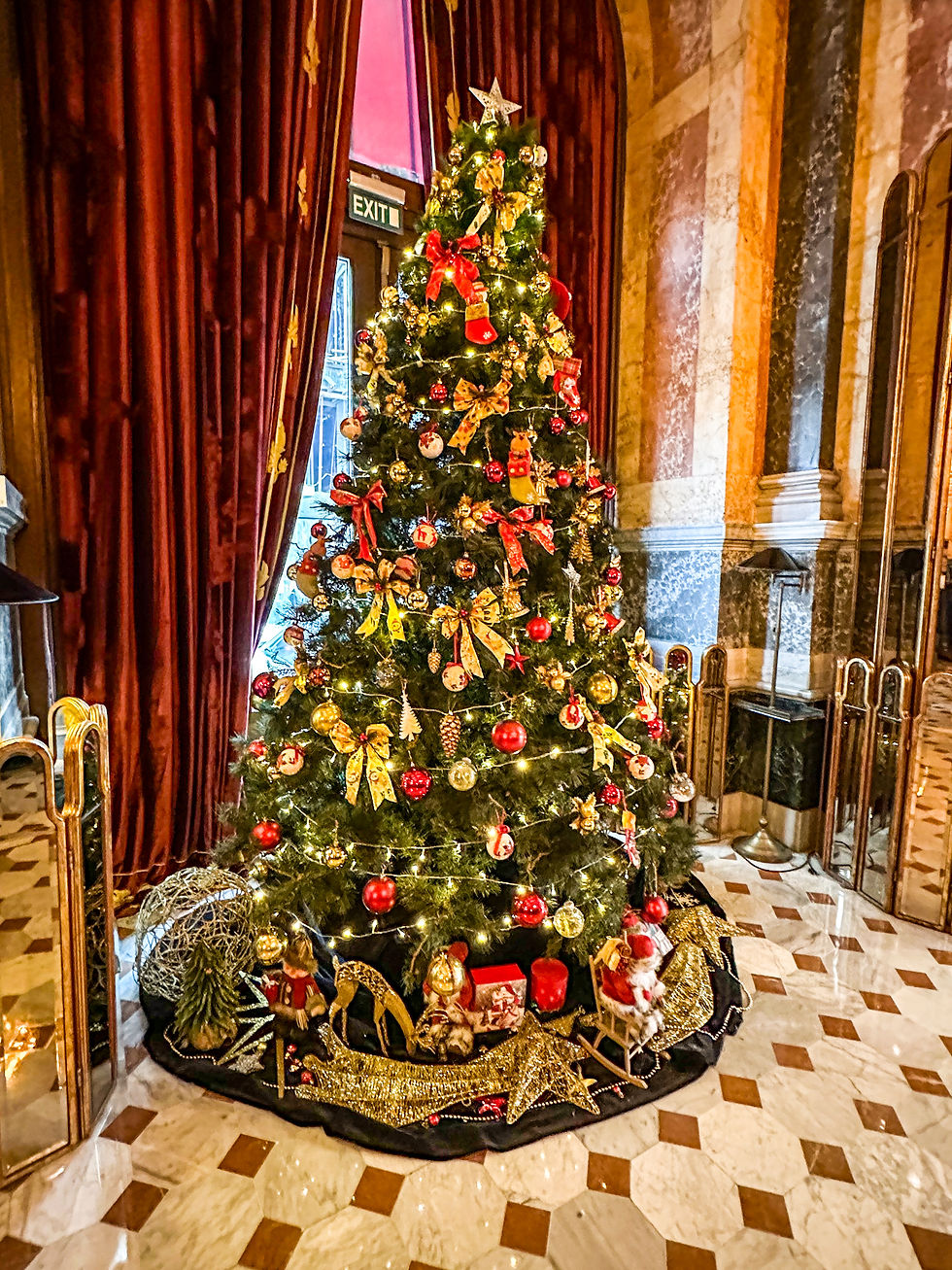
The Pera Palace remains one of Istanbul’s most atmospheric hotels, beautifully restored to preserve its Belle Époque soul while offering the comfort and ease modern travelers expect. The hotel features 115 guest rooms and suites, each styled with a blend of period elegance and contemporary touches — brass details, rich textiles, marble bathrooms, and views over the Golden Horn and the city’s winding streets. Guests can enjoy an elegant spa and hammam, a fitness center, a serene indoor pool and jacuzzi, and several refined dining spaces, including the Agatha Restaurant and the Kubbeli Lounge, where afternoon tea is served beneath the soaring domes that give the lounge its name. Despite its age, the hotel feels both luxurious and intimate — a place where historic charm and modern comfort meet effortlessly.

Step outside the Pera Palace and you’re in the heart of Beyoğlu, the vibrant district once known as Pera, long considered Istanbul’s window to the world. From the hotel, it’s a short walk to the Galata Tower, the Golden Horn, and the tram that carries you across the water to the city’s great landmarks: Hagia Sophia, Topkapi Palace, the Blue Mosque, and the Grand Bazaar. Yet Beyoğlu itself is distinctly contemporary, filled with art galleries, boutique shops, rooftop bars, bookstores, cafés, Michelin-starred restaurants, and a lively music scene. For travelers, the Pera Palace Hotel offers the perfect balance — close to Istanbul’s historic wonders and fully immersed in the energy of modern city life.

Staying at the Pera Palace was one of the highlights of our time in Istanbul. The service was gracious without being formal; the rooms were comfortable and beautifully maintained; the hotel is far more affordable than other five-star hotels in the area; and every part of the hotel seemed to hold a story. You can linger over breakfast in the Kubbeli Lounge as the morning light filters through the domes, relax with a decadent afternoon tea, and/or return in the evening to have a drink in the historic bar — a place that makes it easy to imagine an era of steam trains, velvet gowns, and whispered conversations. It’s a hotel that doesn’t just host you; it invites you to dream, and it stays with you long after you’ve checked out.


Comments